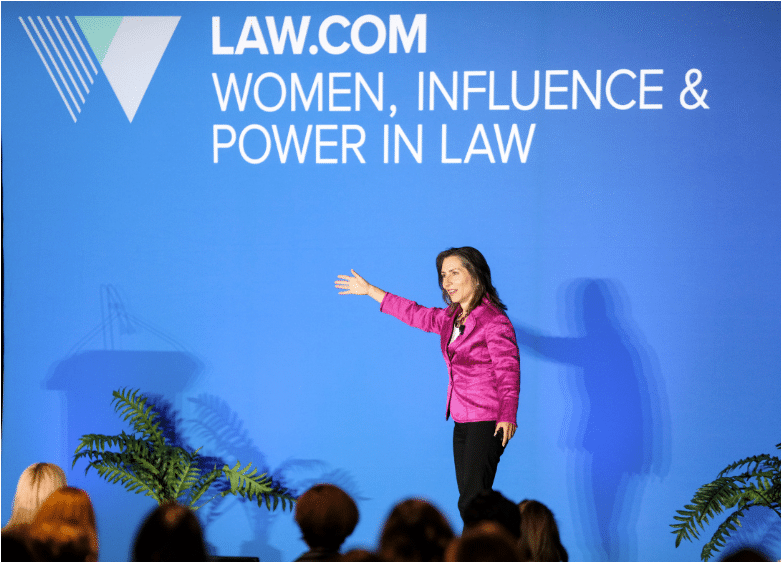
Some of the strongest leadership branding around the Women, Influence & Power in Law conference didn't happen on the stage. It came from attendees who went home and publicly credited the people they'd learned from — a move that builds influence precisely because it isn't asking for any.
Last week I had the pleasure of delivering the closing keynote at the Women, Influence & Power in Law (WIPL) conference in Nashville. Full house, terrific energy, and a room full of brilliant women who had come to lift each other and rise together at the same time. (Full disclosure: Nicole Kidman gave the opening keynote, so I would have wanted to be there whether I was speaking or not!)
But the thing that has stayed with me happened after the conference ended.
Over the following days, my LinkedIn feed filled with posts from women who had been in that room — senior partners, mid-level counsel, women a year out of law school — sharing their biggest takeaways from the event.
These weren’t humble-brag “look where I was” posts. On the contrary, they were simple posts with actual substance: the two or three big ideas that landed for them, why, and who said them.
Jasmine Karimi and Amanda Dinges each wrote excellent examples of exactly this.
It's one of the smartest, most underrated leadership branding moves there is, and almost nobody talks about it that way. Here's why it works.
1. It signals generosity instead of scarcity
You went to the conference. You got the insight. You could keep it.
But sharing it says something about how you operate: that you believe value multiplies when it circulates, and that you'd rather your network benefit than protect a small informational edge.
That's a leadership trait, and you demonstrated it rather than claiming it.
2. Shining a light on someone else reflects back on you
These posts tagged the speakers and contributors behind each lesson. That's real credit, publicly given.
It puts those speakers in front of a new audience, and it puts the writer in front of the speakers' followers. That’s two reasons why the speaker now already feels gratitude and a personal connection toward the writer.
It also gives the speaker a reason to respond, connect, and remember the person who did it, and even reciprocate. Everyone in that exchange comes out ahead, and none of it required asking anyone for anything.
(I know because she tagged me, and these are all the little thoughts that went through my head when I saw it. And here’s further proof: I’m writing about them here and giving them credit in front of you!)
3. Is it still self-promotion when the spotlight points outward?
This is the part that's hard to engineer on purpose. Most visibility tactics carry an undertone of “look how special I am,” and audiences can hear it.
A “takeaways” post has a different posture entirely: I learned something worth passing along.
You are visible — your name, your judgment, your point of view about what mattered — but the spotlight is aimed at someone else. You come across as a leader secure enough not to need the credit.
That is executive presence doing its actual job.
Presence isn't volume or polish — it's the impression of substance and security others form while watching how you behave. This demonstrates both, far more convincingly than any self-promotional post could.

4. It opens doors you didn't have to knock on
People like these posts. They comment, they add their own takeaway, they reshare to audiences you'll never reach on your own. (Again, I reshared Jasmine and Amanda’s posts on my own feed, because I thought their take-aways were pithy, widely relatably and effective.)
Every one of those interactions is an open door to a conversation you didn't have to initiate. Some go nowhere. Some turn into a referral, a client, or a collaborator three years from now. It's networking in its least transactional, most durable form — you gave first, and without an invoice attached.
What should a conference takeaway post actually say?
Here's what stops most people: they assume a post like this needs to be polished, strategic, and worthy of publication in the Harvard Business Review… or at least worthy of the moment.
It doesn't.
You already took notes at the event. You already know which two or three things made you sit up. Pull them out and summarize them in one sentence each. Name the person you heard it from and tag them. Add a line about why it mattered to you. Post it.
Done.
Ten to fifteen minutes, start to finish. No agonizing over the hook. No content calendar. The whole message is simply: I thought this was valuable, and I hope you do too.
That's it. Nothing asked for in return — which, not coincidentally, is exactly why it works.
Generosity is a brand strategy
We tend to think of personal brand as a function of what we broadcast about ourselves: our credentials, our wins, our thought leadership. But the most powerful impressions people form about you come from watching how you treat other people's contributions when there's nothing obvious in it for you.
That's the same principle underneath everything I teach about influence: what you say matters, but how you show up around other people is what they actually remember.
So the next time you come out of a conference, a workshop, a great client conversation, or a book that changed how you think — take fifteen minutes. Share what you learned. Credit the person you learned it from.
You will be surprised how far a little light travels when you aim it at someone else.