I can’t tell you how many times I’ve heard clients say things like:
“I just can’t speak up in meetings.”
“I’m told I’m too abrasive but I’ve tried being nice and that didn’t work so I have no choice.”
“People don’t take me seriously because I’m (young/female/petite/other).”
While I’m sure that each of those statements is rooted in experience, one other thing is also true: Each of those statements also reveals a limiting belief.
Before we coach around communication, we need to shift the mindset.
They’re what Muriel Wilkins, in her book Leadership Unblocked, calls “hidden blockers”: internal scripts that feel like truth, but actually limit your leadership voice, visibility, and influence.
They’re often invisible. They’re always powerful. And they are changeable.
Here are 7 communication beliefs that derail executive presence—and a simple framework to help you break free.
7 Hidden Communication Blockers for Leaders (and What They Cost You)
1. “I need it done now.”
The urgency trap. When everything is priority,” then nothing is. Once seen as efficiency, this belief drives chaos over clarity.
What it costs: Strategic focus, team capacity, and long-term results.
Reframe it: What actually needs to get done today, and by extension, what must wait?
2. “I’m right, that’s all that matters.”
Your intellect got you here—but it won’t take you further if it shuts down others.
What it costs: Collaboration, creativity, and team buy-in.
Reframe it: “Let’s explore and vet all options—together.”
3. “I don’t belong here.”
Whether it’s imposter syndrome or past conditioning, this belief keeps you quiet when your voice matters most. Ironically, it becomes a self-fulfilling prophecy. If you don’t contribute anything when you’re there, you’ll eventually stop being invited.
What it costs: Reputation, visibility, and opportunity.
Reframe it: “I’ve earned my seat—and my perspective is important.”
4. “Men/people don’t take me seriously because I’m young/petite/a woman.”
While it’s possible that an overt or covert “-ism” is occasionally at issue, if you find that this is “always” the problem, it’s time to look inward and see where something in your patterns are contributing to the results you’re getting. (I hear and help clients fix this one – a lot.)
What it costs: Gravitas, confidence, trust, and full participation.
Reframe it: “What am I doing that might be perpetuating these patterns? How can I speak in a way that authentically commands the room regardless of my size or gender?”
5. “I want everyone to feel like family—so I avoid hard conversations.”
Great culture starts with care. But care without candor or standards leads to confusion.
What it costs: Accountability, trust, and growth.
Reframe it: “Tactful truth is kind. Feedback is a gift—even if it’s uncomfortable.”
6. “I don’t want to be the center of attention—I might mess up.”
This belief masquerades as humility, but it’s fear in disguise. If you manage others, you have a responsibility to represent their interests. They need you to use your voice in rooms where they can’t use theirs
What it costs: Visibility, leadership brand, and influence.
Reframe it: “Visibility isn’t vanity—it’s responsibility. If I have value – questions, ideas, perspectives, etc. – I need to share it so the best collective decision can be made.”
7. “People say I’m too aggressive, but when I’m ‘nice’ it doesn’t work—so I have no choice.”
This is a false binary: Assertive or invisible. But there’s a third option: tact.
What it costs: Relationships, credibility, and sustainability.
Reframe it: “I can be clear and kind. Strong and inclusive.”
Once you’re clear on where something in your beliefs is – at least partially – responsible for being stuck where you are, then we can get to work on the communication skills to get un-stuck and launch your brand and results forward.
Drop me a line here if you’re ready to have that conversation and figure out how to get unstuck.
Need some more encouragement to put these thoughts into action? There are two great podcasts I’m excited to share this week, which give concrete suggestions into how to expand your mindset and your influence.
The first is the Better Leadership Team Show with Mike Goldman.

In this episode, I sit down with Mike to explore how leaders can communicate with greater impact on stage, in the boardroom, and over Zoom. We dig into:
- the “expert’s curse”
- Balancing authority with vulnerability
- the importance of repeating and reinforcing vision
- how to align what you say with how you say it so your message truly connects
- and share practical tips you can apply in your very next meeting.
This conversation is packed with strategies to help you communicate with clarity, confidence, and influence. Check it out on Spotify or Apple podcasts.
Next, I had a powerful and fun conversation with Liat Sacks on her rather ironically named “Behavior Bitches” podcast. If your eyebrows went up at the name of her show, you’re not alone – mine did too… at first.
That is, until I checked it out and realized the oh-so-important work she’s doing in the world of cognitive behavioral therapy, helping professional educators get licensed to work with children who have special needs. She is helping these educators find their voice (the RIGHT way!) in greatest service of their students.
And trust me – she does NOT warrant the name of her show!
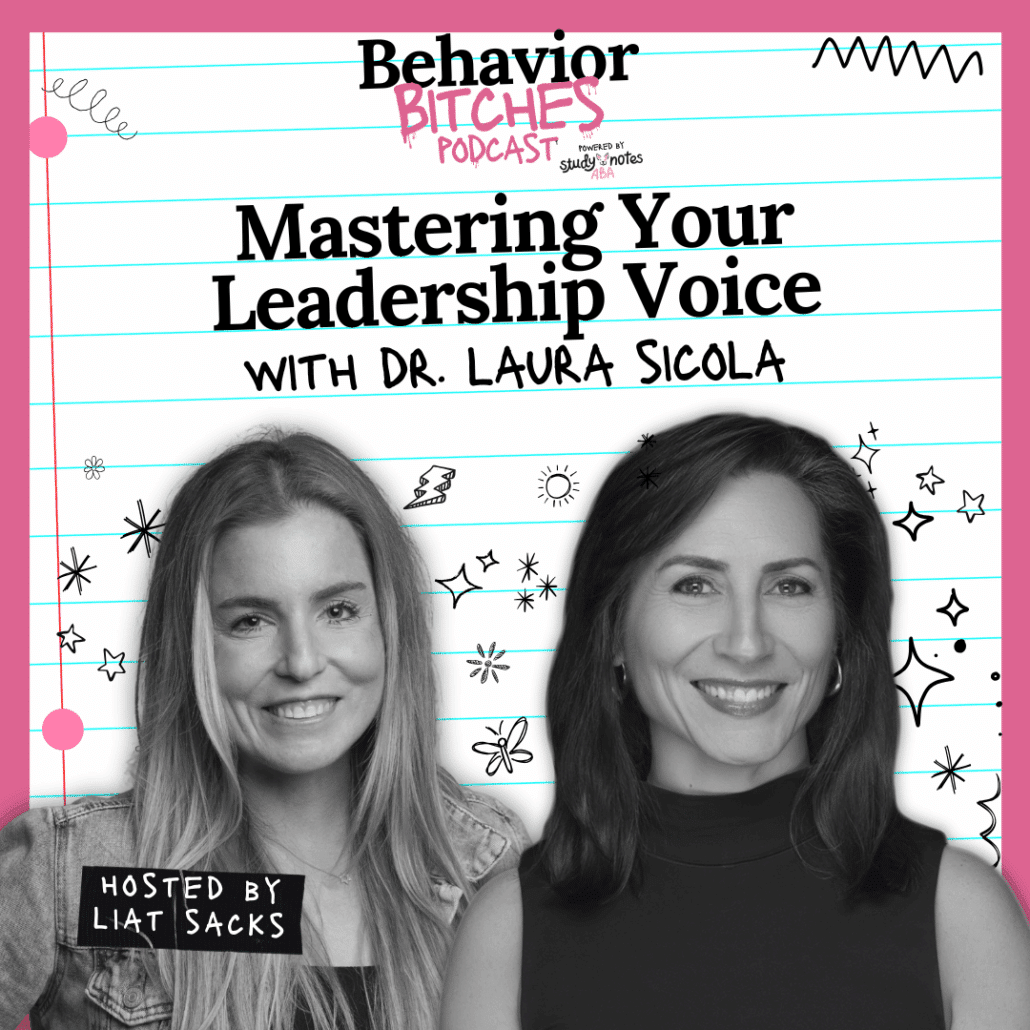
Our conversation was a crash course in:
- How to project greater confidence and authority
- how your tone, pacing, and pitch can change your message
- how to control for vocal fry and upspeak
- How to say your name so people understand and remember it!
Whether you’re a boss, a student, or just trying to stop saying “like” all the time, this episode will have you speaking to influence people, not just to fill silence.
Check it out on Apple, Spotify or Youtube.
Remember: This isn’t about perfection. It’s about expanding your range—so you can lead with purpose and confidence, not let limiting beliefs hold you back.
Drop me a line here if you’re ready to have that conversation and figure out how to get unstuck.